
Articles · ISSEO
To create with AI, you must have learned to do without it
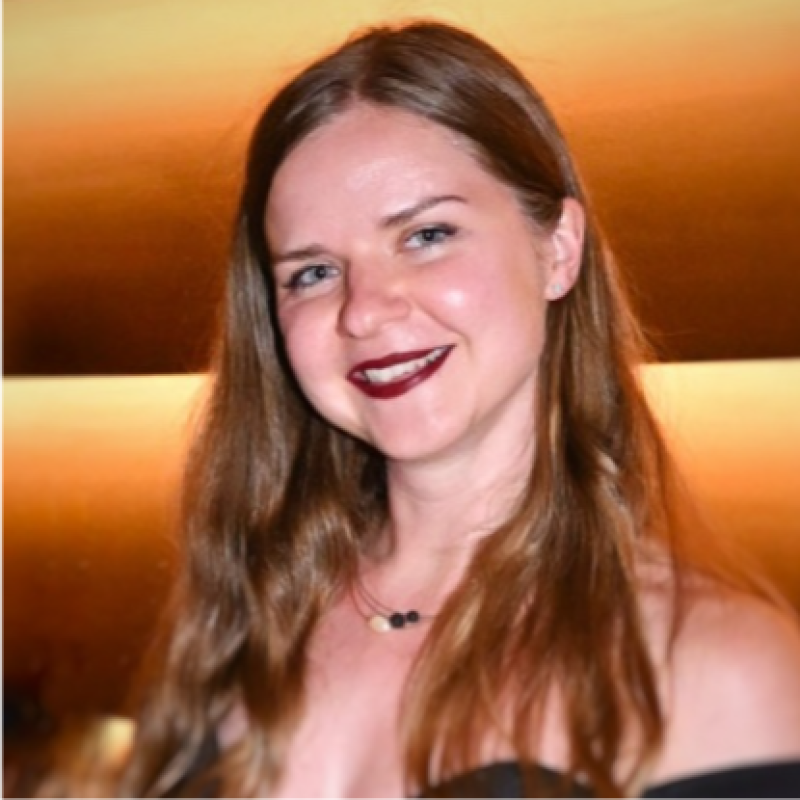 With Daria MorozovaResearcher, PhDLinkedIn profile ↗
A management researcher at Leiden University, Daria Morozova studies what artificial intelligence does to creativity at work. Her research suggests that value is shifting from the output to the direction given to the machine. Yet this skill requires having learned to work without it, a paradox that organisations, eager to automate, are only beginning to grasp.
At a French company, team meetings follow one rule: slides must be prepared with Copilot, Microsoft's AI assistant. Whether three slides are enough to get the idea across matters little. Without Copilot, they do not satisfy management, even when the machine does not do a better job. For Daria Morozova's friend who described this rule to her, the tool meant to save time mainly created work that nobody needed.
The scene encapsulates the question the researcher, an Assistant Professor of Management and Organisation at Leiden Law School in the Netherlands, has been exploring since her PhD at HEC Paris: what becomes of human creativity when a machine produces on our behalf?
Everyone is creative
Daria Morozova begins by dismantling an image. Creativity has been mythologised, she argues: we picture a creative person as someone exceptional. In organisations, however, the accepted definition is simple: producing something new and useful. More broadly, she sees it as the ability to understand what is happening and adjust to circumstances to achieve the intended result. “We are all creative, because we need creativity to be able to live and survive.”
If so many employees say they lack this quality, it is first because creativity exists only when it is recognised. A new solution proposed in a context that does not want it will not be considered creative. Secondly, creativity is judged by its product. “Many people say ‘I am not creative’ because they do not have something that can be represented as a creative result. But the process can also be very creative.”
AI makes this distinction crucial. For decades, creativity at work has been understood as an individual ability: someone writes a text or produces a document, and everyone knows who did what. By inserting itself into this work, AI blurs attribution. In recent studies, the researcher observes, the evaluation of a creation, whether a piece of music or a marketing campaign, increasingly depends on the effort perceived to have gone into it. Yet that effort is diminishing, and the path taken becomes difficult to observe. She sees major implications for management and employee assessment.
The comparison trap
Faced with this competition, the most common reflex is to measure oneself against the machine. In her thesis, Daria Morozova studied what happens when AI appears to threaten people's creative identity. The result proved more complex than she had imagined. People who distrust AI make greater efforts to prove that they are more creative than it, without actually becoming so: their creativity remains at its previous level.
Comparison has other effects. Working with AI means losing the perspective of a colleague who will examine what you have done, and settling more quickly for a result that is good enough. Conversely, people who believe that nothing the machine produces is truly creative attach intrinsic value to human work alone, undermining any promise of more effective collaboration between humans and AI. Everything depends, she insists, on what each person thinks of themselves and others.
This is why creativity training matters. She places it in the realm of self-confidence, what psychologists call self-efficacy. “If you do not believe you can be creative, because there is an AI that will be much more creative than me, it becomes much harder to start being creative.” It is up to the company to remind everyone that they have their own experiences, ideas and relationship to the world. Not every organisation wants this, the researcher concedes, because creative employees can disrupt established ways of working. But those that want to innovate need people who can spot what works and what could work better.
Knowing how to work without the machine
The debate about AI at work often focuses on dividing up tasks: repetitive work for the machine, everything else for humans. The research Daria Morozova is conducting with Sonia Gatchaeva at the University of Stirling in the United Kingdom, currently under review at a scientific journal, shifts the question. It concerns experienced professionals whose work is increasingly taken over by AI. What matters to them is not how much work the machine does, but where the direction originates. “If you are in charge of the AI, for example if you give it an idea or a very precise direction, you see the process as something you are responsible for. And naturally, you are.” Whether AI did more of the work matters little as long as the intention came from the human.
For human resources leaders, the implication is clear: they need people who already know how to practise their profession without AI. This is where the paradox arises. “If you do not have people working without AI, they have no means of acquiring this ability to work without AI.” The researcher thinks of young professionals who will enter the labour market in five or ten years without knowing how to write a brief on their own or judge whether the machine has done a good job. The risk becomes collective: organisations commissioning results from AI without being able to say whether they are correct, good or of high quality.
She gives an example from outside business: the many books published on Amazon or other platforms without editorial checks, written by “people who wanted to write something, but lack the ability to assess their work”. The mechanism applies to every profession. Anyone who has never learned what a job well done looks like cannot see what is missing from their own work, and will not make the effort to achieve it if they have not been socialised into that standard.
The art of pretending
Employees must also be given time to exercise this ability. Work organisation is not her field, Daria Morozova cautions, but she envisages two futures. In the first, AI handles linear tasks and people work less to produce more. In the second, the one she fears, people work better but also more: pointless reports, greater demands for speed and overloaded days, at the risk of multiplying what the American anthropologist David Graeber called bullshit jobs. Yet creativity needs periods of low intensity. Research by others even shows that a little procrastination makes people more creative, as thinking continues in the background. Leaders should deliberately protect these moments and take inspiration from brainstorming: let everyone develop their own ideas before confronting them, here with the machine.
The message must also be credible. The researcher compares AI adoption programmes with diversity and inclusion policies, or even greenwashing. Among the sceptical employees she encounters in her research, management's words carry weight only if employees consider the organisation sincere and transparent, and have a relationship of trust with their manager and team. The issue extends beyond AI use: it is a matter of culture.
Without this culture, employees pretend to use AI, particularly in professions where experience matters, such as data analysis. The phenomenon accompanies every new technology: “We learn how to use it, and we also learn […] how to work less with this technology while pretending that we work enough.” Creativity does not disappear; some of it shifts towards the art of producing little while giving the impression of producing a great deal. Fifty AI-generated documents may add no value, hence her question to leaders: are they using AI out of necessity or to follow a trend? Stable teams offer a safeguard, because it is harder to pretend in front of colleagues who know how you used to work.
One problem remains open for the researcher, what economists call the principal-agent relationship: the employee and the organisation do not have the same interests. To steer this creativity of evasion, it would have to be measurable, and those practising it have no intention of revealing it. “If you cannot see it, it is almost impossible to measure it,” she acknowledges, before suggesting that the question deserves further research.
Background. Daria Morozova is Assistant Professor of Management and Organisation at Leiden Law School (Leiden University, the Netherlands). A PhD graduate of HEC Paris, she devoted her thesis, Three Essays on Being Human Alongside Artificial Intelligence, to examining what AI changes in creativity and identity at work. She contributes two chapters to Meta-Human Creativity in Organizations, a collective volume by around fifteen authors with international perspectives, due to be published by Routledge in late 2026. She also performs stand-up comedy.
This article is drawn from the interview with Daria Morozova in the podcast Valeur humaine à l’ère de l’IA (ISSEO).